September Is Hurricane Season’s Peak: What Sarasota & Manatee Residents Should Know About Their Plumbing
September marks the climatological peak of the Atlantic hurricane season. While the season runs from June 1 through November 30, September 10 is the historical peak for tropical cyclones. Local officials in Sarasota and Manatee counties highlight August through October as our highest risk period.
Recent storm seasons show that hurricane prep requires more than shutters and bottled water. Your plumbing system needs attention too. You cannot control the weather, but you can protect your property from avoidable water damage.
Heavy Rain Exposes Existing Plumbing Weaknesses
Sarasota and Manatee counties face heavy downpours during the peak of the storm season. This deluge forces your plumbing system to manage massive water volumes while tropical systems stress your property.
Severe weather acts as a stress test. It rarely creates new plumbing flaws out of thin air. Instead, it exposes hidden vulnerabilities that have developed quietly over time:
- Slow drains quickly escalate into severe sewer backups.
- Minor leaks rapidly become uncontrollable indoor floods.
- Corroded pipes fail completely under sudden structural pressure.
Locate Your Main Water Shutoff Valve Now
Finding your main water shutoff valve is the fastest way to minimize property damage. If a pipe bursts during a storm, shutting off the water instantly protects your floors, walls, and belongings.
Do not wait for an emergency to locate it. Take these steps today:
- Search the perimeter: Look where the main line enters your home, usually near an outdoor spigot or inside the garage.
- Check the street: Locate your water meter box near the curb, which requires a meter key to close.
- Test the valve: Ensure it turns smoothly and shuts off the water completely.
- Educate the household: Show every family member how to operate it.
Inspect Your Home for Small Plumbing Issues
A looming storm is the worst time to deal with a running toilet or a clogged sink. Preventative maintenance eliminates extra stress during a weather emergency. Inspect your home for these warning signs:
- Leaking faucets
- Exposed pipe moisture
- Slow sink or shower drains
- Constantly running toilets
- Wall or ceiling water stains
- Corroded copper or galvanized steel
- Water heater rust or puddles
Protect Your Drains and Sewer System
Heavy rainfall overloads local municipal sewer lines and residential septic drain fields. If your home already has sluggish drainage, a storm will worsen the issue. This is crucial for older homes across Southwest Florida, where aging pipes face extra wear from hard water, high humidity, sandy soil shifts, and heavy seasonal rain.
Do not ignore unusual drain odors, gurgling sounds, or frequent backups. Schedule an inspection to clear your lines before severe weather forces a major backup into your living space.
What to Watch For After a Hurricane
Hurricane preparation does not end when the storm passes. Once authorities clear you to return home, you must carefully assess your plumbing system. Severe weather can cause hidden structural shifts or pressure changes that damage your pipes.
Inspect your property immediately for these post-storm warning signs:
- Low water pressure: Indicates potential municipal supply issues or a hidden leak on your property.
- Discolored water: Signals disrupted water mains, sediment intrusion, or broken pipes.
- Foul drain odors: Points to sewer line backups or dried-up trap seals.
- Slow or backed-up drains: Means rising water tables or debris are blocking your drainage system.
- Unexpected standing water: Reveals underground pipe breaks or foundational leaks.
- New appliance leaks: Highlights damage to your water heater, water softener, or fixture connections.
- Poor toilet flushing: Suggests structural venting blockages or main line restrictions.
If your plumbing behaves unusually, do not assume the issue will fix itself. Addressing hidden damage early prevents catastrophic water damage and high repair costs later.
Be Proactive: Protect Your Home Year-Round
The best time to identify a plumbing vulnerability is before it becomes an emergency. Florida’s harsh environment strains your plumbing system every day—not just during hurricane season. Your pipes constantly battle:
- Hard water that corrodes metal and creates scale buildup.
- High humidity that accelerates rust on exposed fittings.
- Heavy seasonal rain that shifts sandy soil and stresses underground lines.
- Everyday wear that weakens aging connections.
To help homeowners stay ahead of these risks, we created the One Cool Customer (OCC) membership at Cool Water Plumbing. This proactive program includes comprehensive, whole-home plumbing inspections and routine maintenance. We catch small issues early so your system remains resilient during a crisis.
Prepare Your Plumbing with a Partner You Trust
Living in Sarasota and Manatee counties means accepting tropical weather as a part of Florida life. However, you do not have to face storm season with anxiety. By taking practical steps to protect your home, you can weather any storm with confidence.
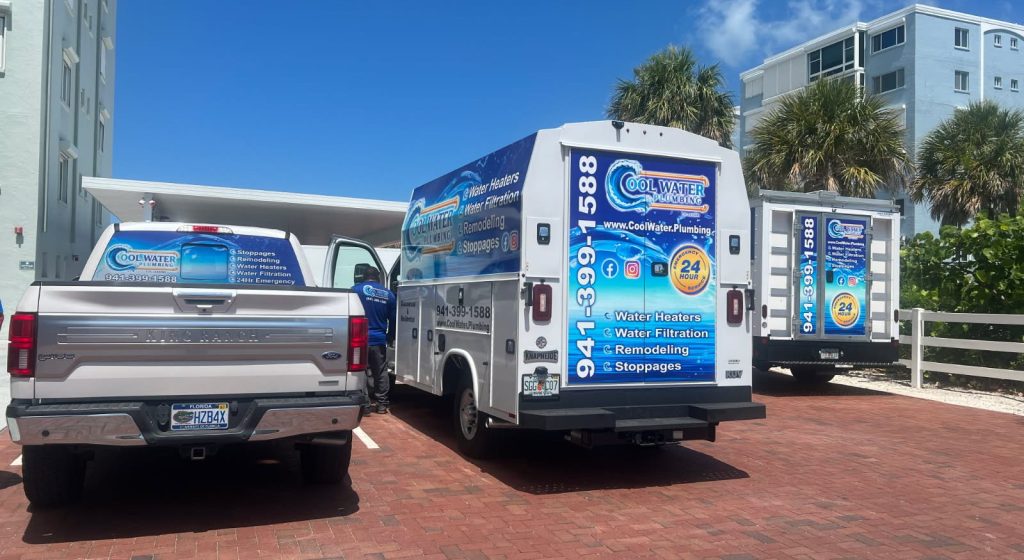
At Cool Water Plumbing, we provide more than just a quick fix. We help you understand your home, make smart decisions, and gain peace of mind. Our goal is to be the lifelong plumbing partner you can depend on.
Whether you need to resolve a lingering plumbing issue or want a professional safety inspection for the rest of the storm season, our team is ready to help.
Frequently Asked Questions: Plumbing and Hurricane Season
How should I prepare my plumbing for a hurricane in Sarasota or Manatee County?
Before a storm hits, locate and test your main water shutoff valve, clear any slow drains, and check visible pipe connections for rust or corrosion. Fixing these small vulnerabilities early prevents severe weather from turning them into major household emergencies.
Should I shut off my home’s water before a hurricane?
You do not need to shut off your water automatically for every storm. However, you should know exactly how to operate your main valve if a pipe breaks. Always follow specific evacuation or shutoff directives from local utility and emergency-management officials.
Where is the main water shutoff valve located in a Florida home?
Location varies, but it is typically found where the main line enters the house. Check your garage, along the front exterior wall, or near your street-side water meter box. If you cannot locate it, a licensed plumber can find it and ensure it operates smoothly.
Can heavy rain cause plumbing backups?
Yes. Heavy downpours saturate the ground and overload drainage systems. If your system already has an underlying issue—like root intrusion, structural damage, or a partial clog—the storm will often trigger a severe backup.
Can a hurricane damage underground plumbing pipes?
Yes. Saturated soil, soil erosion, uprooted tree roots, and shifting ground can crack or collapse buried water and sewer lines. Look out for sudden low water pressure, slow drains, or mysterious wet patches in your yard after a storm.
What plumbing problems should I check for before a storm?
Walk your property and look for leaking faucets, running toilets, slow sinks, water stains, and moisture around your water heater. Resolving these issues in calm weather keeps them from escalating when emergency services are unavailable.
What are the signs of plumbing damage after a hurricane?
Watch out for low or inconsistent water pressure, discolored water, foul drain odors, gurgling pipes, or toilets that fail to flush. If your plumbing acts up after a storm, contact a licensed professional to inspect for hidden damage.
Is discolored water after a hurricane safe to use?
No. Discolored water means sediment, a broken main, or utility disruptions have compromised your water quality. Avoid drinking or cooking with it, check your local news for active boil-water notices, and consult a plumber if the issue persists.
What should I do if a pipe breaks during or after a hurricane?
If it is completely safe to do so, turn off your main water valve immediately. Stay clear of any standing water if electrical hazards are nearby. Once safe, call a licensed plumber to handle the repairs.
Should older local homes receive a plumbing inspection before hurricane season?
Yes. Older homes in Sarasota and Manatee counties feature aging pipe materials that are vulnerable to Florida’s hard water and heavy rain. A pre-season inspection catches weak points before tropical systems put them to the test.
Can a whole-home plumbing inspection prevent storm-related problems?
An inspection cannot change the weather, but it acts as a stress test for your home. It identifies hidden leaks, weakened connections, and drainage blocks so you can repair them before a hurricane exposes them.
Who should I call for hurricane plumbing help in Sarasota or Manatee County?
The team at Cool Water Plumbing is ready to help. Whether you need a pre-storm safety inspection, drain clearing, or emergency post-storm repairs, we are your trusted local plumbing partners.